

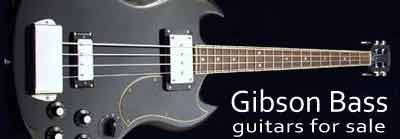
The pickups fitted to bass guitars, and their location on the body have a huge impact on the amplified sound. Other factors: woods, neck join, scale etc all play their part, but the pickup can make an instrument rumble like thunder, or chime link a piano. Gibson wound their own pickups in their various plants in Kalamazoo, and produced an array of different pickups for different basses.
A number of companies make visually quite similar replacement pickups, and whilst these will do as a temporary measure, you will only get the true sound of a Gibson bass with an original Gibson pickup.
EB Series pickups
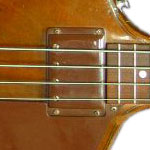
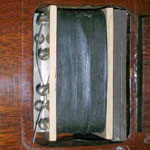

1950s EB Single coil pickup. This was the first Gibson bass pickup. As used on the original EB bass guitar in the early/mid 1950s. The polepieces are not positioned on the vertical axis, as they are with other Gibson Humbuckers, but sit along the far left hand edge. more
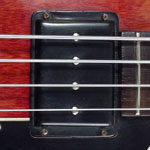
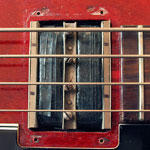
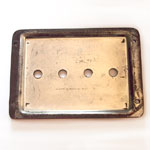
Late 50s early 60s EB humbucker. The EB humbucker is heavily wound to produce a "dark / loud" tonality. Typical resistances are around 30kΩ, but being handwound, they can vary to some extent. The coils are in a vertical configuration; i.e. the axis around which they are wound lies parallel with the strings rather than perpendicular. It has four adjustable polepieces though the central block and two Alnico magnets. This pickup remained basically the same for many years, however early versions had this black bakelite cover. As used on early EB-0, EB-2 and EB-3 basses. more
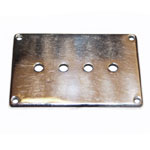
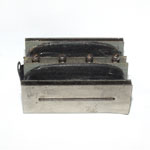
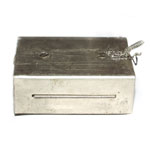
Early-mid 60s EB humbucker Gibson part number (1965) PU-601-N (nickel cover), PU-601-CR (chrome cover). From 1962 until 1965 the EB basses had this nickel cover. The EB3 stopped using this cover shortly before the EB0. (2 1/4" x 3 3/8"). more
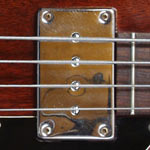
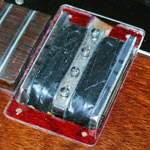
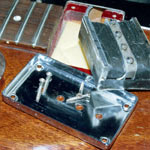
Late 60s EB humbucker This pickup itself is still the same as the earlier 60s ones, however the cover is now chrome and has different dimensions (2 3/32" x 3 1/2"). more
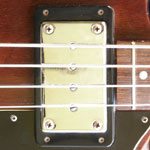
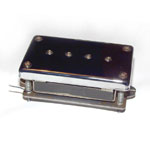
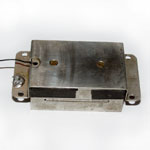
70s EB humbucker (spring mounted) Gibson part number 13559(1971), 13573(1981). This pickup is still essentially the same as the late 60s ones, however it had a plastic surround. The cover is still chrome and the same dimensions, 2 3/32" x 3 1/2". The change to split-headstocks happened at the same time - now the cover was attached to a new underplate, rather than directly into the body. This is the first time this humbucker was height adjustable. The word Gibson was stamped on some pickup covers in 1971. more
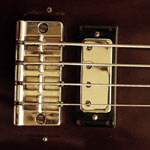
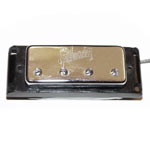
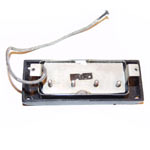
EB mini-humbucker Gibson part number (1965: PU-657, 1971: 13533 ). The bridge humbucker was considerably smaller than the EB neck humbucker; a smaller simpler design, using a single Alnico magnet. Stickered on the underside with 'PATENT NO 2737842'. more
Les Paul Bass, Les Paul Triumph
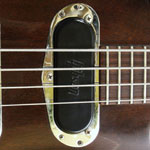
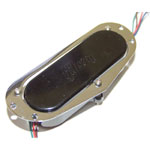
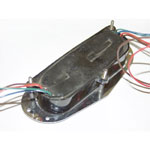
Les Paul bass low impedance humbucker Gibson part numbers 13555 (front), 13560 (back). From 1969, the Les Paul bass and later, the Les Paul Triumph bass used this low impedance pickup, easily identifiable by the chrome surround and Gibson script. Both basses were 'recording' basses made for studio use (although still great live) with a wide range of sounds. more
SB-300, SB-400
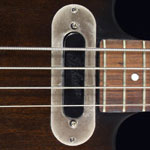
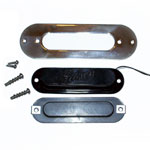
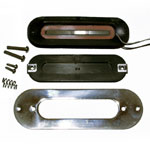
Single coil pickup Gibson part number 13570. Launched in 1971, the SB-300 bass and SB-400 bass were the first Gibson basses to have single coil pickups. These units were also used in the following Gibson guitars: SG-100, SG-200, SG-250, ES-320. They clearly borrowed stylistically from the Les Paul low-impedance pickups (above) that had first appeared on a production bass in 1969. Typical resistance for an SB 300/400 pickup is around 7kΩ. more
SB-350, SB-450
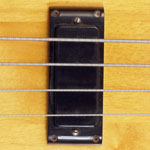
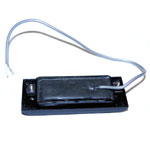
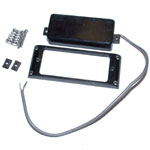
SB humbucker Gibson remodelled the SB range in 1972. Gone were the single coils (above) embossed logo, and chrome plated surrounds; replaced by plain black SB humbuckers, with black plastic surrounds. The SB-350 was short scale, whilst the SB-450 was long scale, but they both used the same pickups. Typical resistance for an SB 350/450 pickup is around 6.2kΩ, for either pickup. more
EB-4L
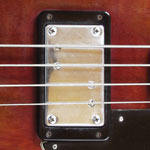
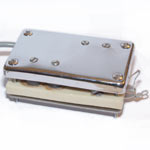
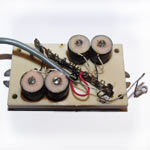
EB-4L super humbucker Unlike the previous EB humbuckers (which had two coils on an axis parallel with the strings), the EB4L superhumbucker had four small coils on an axis perpendicular to the face of the guitar. Each coil wraps around a pole piece. The concept of this pickup is described in the 1972 Gibson bass catalog: This revolutionary new pickup design separates the top two strings completely from the bottom two. You get more tonal response than ever, for a full, natural sound. And Gibson's new Super Humbucking Pickup design delivers more highs and "overtones" for a new sound that's packed with cutting power. more
Grabber
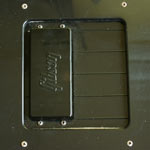
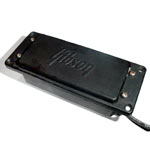
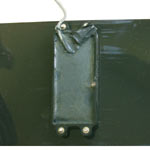
Sliding pickup Gibson part number 13691. The single coil pickup of the Gibson Grabber bass was mounted onto a plastic slide, allowing it to be positioned by the neck, by the bridge, or anywhere in between. The pickup was designed for a "dark tonality" and was a simple single coil wrapped around an Indox magnet core. Some Gibson price lists incorrectly suggest that this pickup is a humbucker. The design remained unchanged for the 10 years of production, 1973-83. In later years, this pickup was also used on the early eighties Gibson Explorer bass. more
Grabber G3
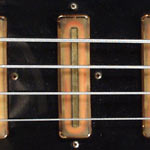
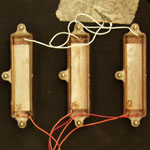
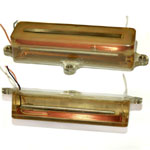
G-3 single coil pickups Gibson part numbers 13109 (front), 13110 (middle), 13111 (back). The Gibson G3 bass was available from 1975-83, the three single-coil pickups were wired into humbucking configuration only. The pickups themselves are designed for a "bright/low" tonality. The windings themselves are wrapped around a central Alnico core. Later models had black covers rather than the clear ones shown here. Dimensions (approx): 79mm x 20mm x 16mm (excluding protruding mounting tabs). more
L9-S Ripper
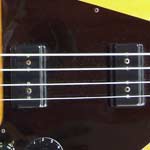
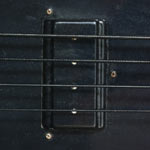
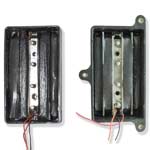
Ripper humbucker Gibson part number 13679 (the front and back pickups are identical). Dimensions: 73.5mm x 42mm x 22.6mm. This pickup was designed for a "clean tonality". Like the Gibson EB bass pickups, the coils are arranged in a vertical configuration (sidewinding), with two magnets - but in this case Indox rather than Alnico. There were two versions of the Gibson Ripper bass pickup, initially they were mounted to the bass body via two screws along the pickups vertical axis (first picture). Later this was changed to threw screws attached to the scratchplate (second picture). This pickup was later used on the Gibson Flying V bass in the early 1980s. more
RD Standard
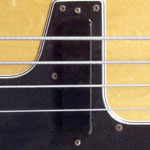
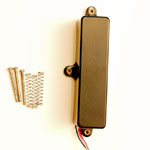
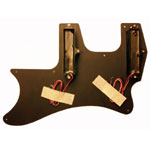
RD Standard humbuckers Gibson part numbers 13063 (front pickup) and 13064 (back pickup). The two RD standard bass pickups are not the same; bridge resistance is around 11kΩ, the neck just 6kΩ. Dimensions: 80.4mm x 21.2mm x 27.3mm. more
RD Artist
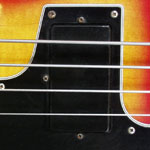
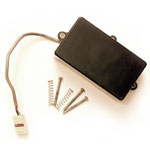
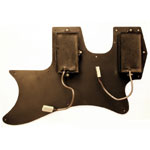
RD Artist humbucker Gibson part number 13066 (front and back pickups identical). Two Indox VII magnets per pickup. Resistance is around 6.5kΩ. Dimensions: 73.5mm x 42mm x 27.3mm. The RD artist bass pickups connect to the Moog circuit board, but are not soldered directly to it; instead they use three-pin connectors which clip to the board. more
Thunderbird
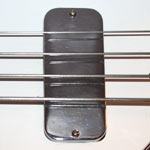
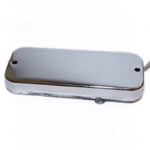
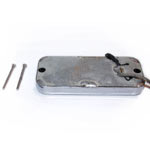
1960s Thunderbird humbucker Gibson part numbers (1965) PU-760-2N (front), PU-760-1N (back). The Gibson Thunderbird bass pickups of the 1960s can be differentiated from the 70s models in that they have two mounting screws rather than three. more
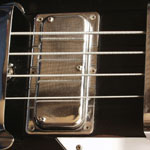
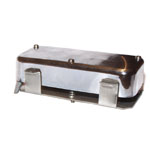
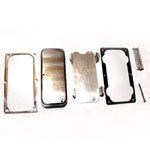
Bicentennial Thunderbird humbucker Gibson part numbers 13531 (front), 13530 (back). The Bicentennial Thunderbird pickup is a sidewinder, like the EB and Ripper, but is designed for a brighter tonality. It has just one Alnico magnet, rather than the two of the EB and Ripper. Note that this Gibson Thunderbird bass pickup has three screws going through it, whereas the 1960s version had just two. more
Victory (standard, artist and custom)
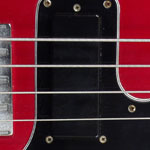
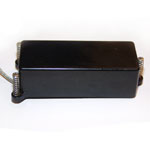
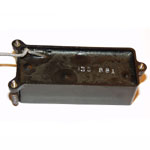
Series VIIB humbucker Victory bass series pickups were designed by Tim Shaw of the Kalamazoo plant R&D team. The Victory Standard pickup used thinner diameter wire than the Victory Artist, in order to produce more mid-range and presence. According to Gibson, "due to the exceptional efficiency and balance characteristics of this new design pickup, no adjustable pole pieces are necessary".
Dimensions: 87.3mm x 34.8mm x 27mm (excluding protruding mounting tabs).
From the 1982 Gibson Victory owners manual:
instead of using the traditional side by side placement of the humbucking pickup coils, and "end to end" coil placement design is incorporated. This enables each string to pass over only one coil of the pickup producing the pure, sweet, full frequency response of a true single coil pickup. However the pickups incorporate standard "humbucking" wiring to cancel the unwanted noise and hum frequencies unfortunately inherent in a simple coil pickup design. more
Gibson bass pickups for sale

EPIPHONE SG EB3 ELECTRIC BASS GUITAR (Gibson Pickups)
Cranbourne, VIC, 3***, AUSTRALIA
AU $550
Low action, recently serviced
Has a small chipped paint behind tuner headstock
It features a slim SG-style body, a 34?? scale
Lives in a clean home, works perfectly well
Reason for selling: Upgrading amp head
Open for trade to Marshall Origin Head
Pick-up / Drop-off: Cranbourne East / Frankston / Moorabin VIC
... more

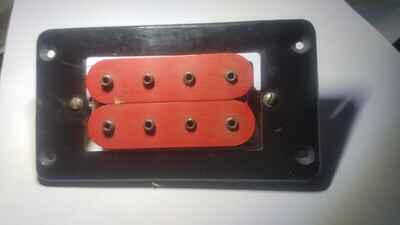
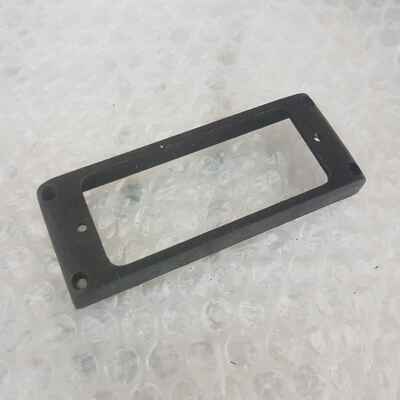
Hi I have 2 things on my mind 1st is I have a hollow body bass guitar and a EB3 humbucker neck pickup, would I need a chassis plate made to be able to mount it in the hollow body. The body is a violin bass body without any holes cut in it yet. My 2nd is to do with a Epiphone Viola bass with no pickups where would I be able to buy or find the pickups and surrounds for it. The body, neck and electrics are second-hand and Epiphone don't issue parts for it for some reason. I have bought pickups and surrounds for it but the whole pickup and surrounds slip through into the body so I can't mount them and need the same pickups that Epiphone installed the screw centres for the surround plate are 92mm x 35mm the adjustment screws for the height are 78mm centre too centre, do you know where I can buy some from or it means an alteration to the body openings for the pickups I have bought to fit. Hope you have any suggestions to my problems. Thank You.
in search of Epiphone EB-3 SG Bass PICKUPS POTS KNOBS JACK Sidewinder NYT Buckers