FlyGuitars Interview: Martin Turner

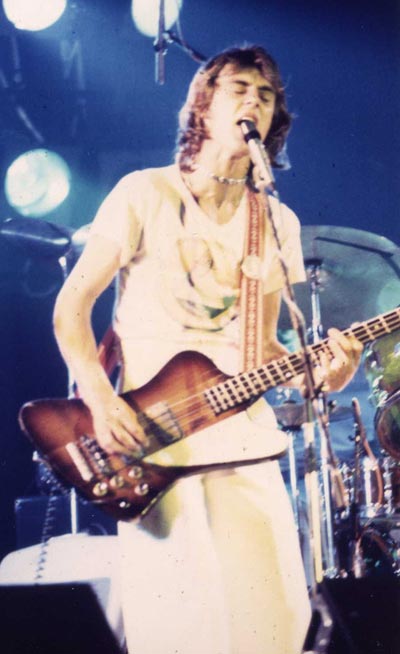
By Graham Fieldhouse Bassist Martin Turner formed Wishbone Ash in 1969 with drummer Steve Upton after playing together in various bands in the 1960s. Along with twin lead guitarists Andy Powell and Ted Turner, they went on to become one of the most respected acts of the 1970s, playing blues-based rock, with folk and classical influences. Martin Turner is famous for his melodic bass playing, songwriting, regular lead vocals and of course his Gibson Thunderbird bass.
He split with Wishbone Ash in 1980, and after renunion tours in the late 1980s, he now performs with a new line-up known as Martin Turner's Wishbone Ash. Martin talks to FlyGuitars.com
FlyGuitars From what I've seen you started out playing guitar before taking up the bass?
Martin Turner I've always been a guitar player. I'm not a musician guitar player you know playing fancy lead and all that stuff. I play rhythm purely for writing songs really and a sing, song. When I work with lead guitarists, like Wishbone through the 70s I would sing them the melody and they would translate it on to guitar. They were really good at guitarising the melodies that I would come up with. I have written lead lines but I tend to be pretty good at that Hank Marvin sort of stuff, all the bluesy bending notes up high, can't do that, that's not me.
FlyGuitars So do you think that has influenced how you have adapted to the bass?
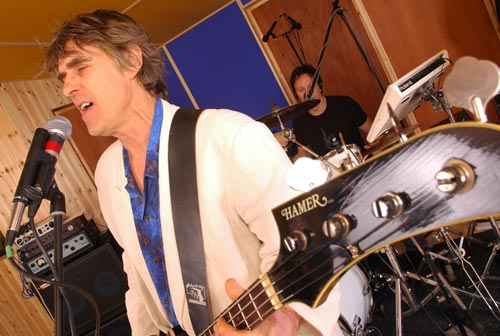
Martin Turner I suppose it must have really, the main thing being obviously that I play with a plectrum, and I don't even hold it correctly. This is what happens when you are not taught to play an instrument formally in a correct fashion. You pick up these wacky little habits and unorthodox ways of playing and it's a double-edged sword because it means you can play certain styles and certain things quite well and there are other things that you cannot do. I like that because it's part of the restriction that gives you your identity and your style, you're forced to work in certain parameters.
FlyGuitars Playing with a pick as opposed to fingers does help to distinguish your sound.
Martin Turner Very much so and in fact in the early days even when we were recording the first Wishbone album or two I was still trying to get comfortable with an instrument. I mean I experimented with a Jazz bass, which is very clicky. If you use a plectrum a Jazz bass ain't the instrument for you really, I also had a bash on a six string bass, everyone felt that would be ideal for me but I didn't get on with it at all.
FlyGuitars Was that one of the Fender ones?
Martin Turner Yeah. Why get so complicated, keep it simple. Four strings is more than enough for my little brain to deal with, and I had a Rickenbacker which I really, really liked and I still do, I've got one at home but I went out on the road and the first time I took it on an aeroplane the neck snapped. I thought oh man, this ain't no good, this things going to see some serious action and the first time I take it some place it turns out to be a girls guitar you know, can't take the punishment so that's when I kicked it in to touch and rang Peter Watts and said to him 'Oi, I need to borrow an instrument mate'' (see part 2 regarding Martin borrowing Pete Watts' Thunderbird)
FlyGuitars What amps are you currently using and what were you using back then?
Martin Turner It's always nice to try different ones. I used BGW power amps for a long time in Wishbone, at front end was an Alembic pre-amp which has got a little valve in it, you know 1U rack, it's basically a copy of a Fender pre-amp stage that's all, good little unit. Nowadays for the kind of size gigs we're doing I am using two Ashdown cabinets. One is a fifteen inch for low end and the top one is a 2 ten inch cabinet. I'm not a fan of twelve inch speakers for bass.
FlyGuitars Have you ever used twelve inch speaker cabs, did you use those in the 70s at all?
Martin Turner Yeah, I don't know what it is about twelve inch speakers, they''re great for guitar but for bass I like fifteens and tens or eighteens even but fifteens and tens work great, so that's what I got. I drive the fifteen inch cab with a little SWR. I think I brought it back from America, it's not that powerful, it's a couple of hundred watts and the top end I'm using a little Ashdown amp, it's got a valve in it so I can crank it and get it to just snarl a bit and it works great for me. I've no doubt that I will be trying other stuff probably quite soon. We've done a hook up with an Italian company Brunetti and they've supplied us with guitar amps that we really like and my first question was wheres the bass amp then? They're still working on it so I'm itching to get a look at that.
FlyGuitars So would you describe yourself as a sort of gear head then in the sense that your keen to try out new and different amps?
Martin Turner Yes and no, I'm always interested to check out stuff but I do tend to find that I seem to like going back to old equipment. Maybe that's because I'm a studio cat really and everyone's buying fancy computers and forging ahead and I'm going the other way, I'?m going back to old 60s bits of gear and valves and all the rest of it. I've been doing that for years and years, even in the 70s. The early solid state equipment if you keep it running has got a lovely sound, it's kind of like very much more analogue sounding, it hasn't got that digital crisp clinical quality to it. It just seems to be the way that it's almost like the heavier it is the better it is.
FlyGuitars It could be said that Wishbone Ash invented and popularised the twin guitar sound, it's been used by Thin Lizzy, Judas Priest and Steve Harris has said he's a fan of the band and they were a direct influence on Iron Maiden. Even now you here new bands like The Darkness using twin leads, where you aware of what you created at that time?
Martin Turner Yes, I wouldn't say we were the first band to do it, I think Peter Green's Fleetwood Mac were experimenting a bit with that particularly when Danny Kirwin joined the band. They had Jeremy Spencer, Danny Kirwin came on board with Peter Green, he was kind of like the boy who they were bringing along and they started to get in to a bit of that harmony guitar thing. You listen to that instrumental track they did Albatross, that's beautiful, huge hit. There was that and Blossom Toes who were a band, I think they only existed for ten minutes. Jim Kreegan was in the band and they recorded in a mate of mines studio Advision where he worked. We used to hear what he was doing on pretty much on a daily basis and I guess we were just surrounded by things that were hinting in that direction if you like and we just took it that stage further really I think. I would say though that with my kind of classical background because I'd always been involved in religious music, classical music, bombarded with it every day of my life, the melodies that I tended to come up with were a bit in that direction. They don't sound it because they''re on top of electric guitar rock music but it gave the band an identity if you like that was a little bit different. I would say that a band like Thin Lizzy, they've come up to us and said that they used to be in the front row of the audience watching what we were doing, thinking great we've got to do some of that but I mean that's the way it is with all bands really. What is totally original in music since bloody Bill Hailey, Bob Dylan, Woody Guthrie, you know how far do you want to go back? So everything's recycled to a certain extent, Thin Lizzy were extremely successful with the harmony guitar thing and I take me hat off to them, brilliant.
FlyGuitars It must feel good though to know you've inspired that?
Martin Turner Yeah it's great to feel you made a contribution to the music, rock music history as a whole although I think in Wishbone Ash's case because of our lack of commercial acknowledgement. We tend not to show up in Rolling Stone magazine polls and MTV and all the rest of it. Wishbone Ash tends to get kind of ignored or forgotten about or looked over. If you talk to actual musicians, working musicians then yeah they''re all well aware of the band usually. I'd agree with that definitely. It's really a strange one, it's a double edged sword because if it we had been commercially successful at any stage with a single or two probably the band wouldn't have lasted for 35 years or whatever it is because you tend to become last years news you know like Right Said Fred or something.
FlyGuitars Once you have that hit I guess there'd be pressure to produce more and the record company are thinking ?oh yeah these guys can write a hit and lets milk that?.
Martin Turner Yeah music by accountancy, never been my forte really.
Thanks to Martin Turner and Graham Fieldhouse for making this interview possible
Why not check out some of these other sites
wishboneash.co.uk
martinturnermusic.com
Rickenbacker bass guitars for sale

VINTAGE 1972 RICKENBACKER 4001 BASS CASE
Minneapolis, Minnesota, 554**, UNITED STATES OF AMERICA
$333

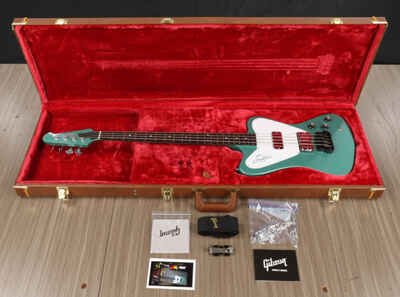
Gibson Thunderbird 4-string Solidbody Electric Bass Guitar - Inverness Green
Fort Wayne, Indiana, 468**, UNITED STATES OF AMERICA
$1500
Used Condition
4-string Electric Bass with Mahogany Body and Neck, Rosewood Fingerboard, and 2 Humbucking Pickups - Inverness Green
8 6 lbs
In good condition. There is a finish chip under the bass edge of the truss rod cover; there are dents in the bass edge of the fretboard at the 2nd and 5th frets. The electronics have been tested as good. The stock bridge has been replaced with a black Hipshot Supertone bridge and it is included inside the case along with all the pictured ... more

GIBSON THUNDERBIRD NON-REVERSED BASS GUITAR
New Port Richey, Florida, 346**, UNITED STATES OF AMERICA
$1600

2022 Gibson Non-Reverse Thunderbird Pelham Blue Electric Bass Guitar #47868
Burbank, California, 915**, UNITED STATES OF AMERICA
$1799
eBay Template Design by OCDesignsOnline HomeAboutTestimonialsPoliciesContactSell your Gear 2022 Gibson Non-Reverse Thunderbird Pelham Blue Electric Bass Guitar #47868 ××××××××××××××××××××××××××××××××××× Item DescriptionWORKING CONDITION: Excellent - Plays great. All of the electronics and controls are working ... more
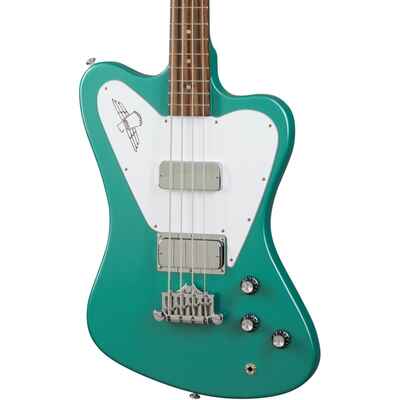
Gibson Non-Reverse Thunderbird Bass Inverness Green
Middletown, New York, 109**, UNITED STATES OF AMERICA
$2198
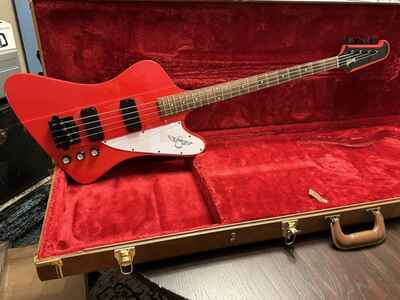
Gibson Thunderbird Bass Guitar
Easley, South Carolina, 296**, UNITED STATES OF AMERICA
$2500
... more
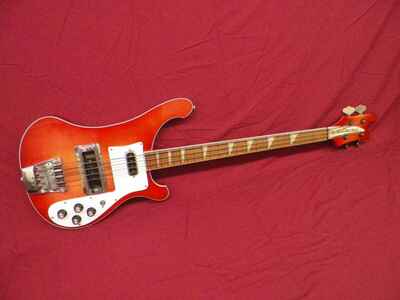
1978 Rickenbacker 4001 Fretless Fireglo Electric Bass Guitar
Phoenix, Arizona, 850**, UNITED STATES OF AMERICA
$3499

RICKENBACKER 4001 ELECTRIC BASS GUITAR, 1977 (meee-ls) (PDS031136)
Denham Springs, Louisiana, 707**, UNITED STATES OF AMERICA
$3500
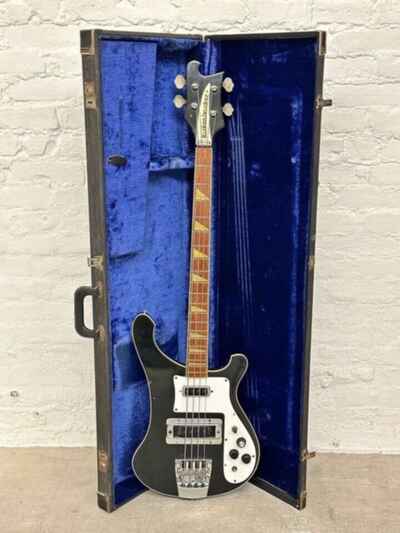
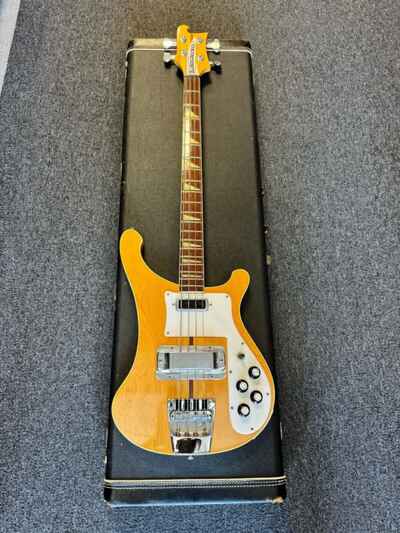
Rickenbacker 4001 Bass Guitar 1974
Houston, Texas, 770**, UNITED STATES OF AMERICA
$3800
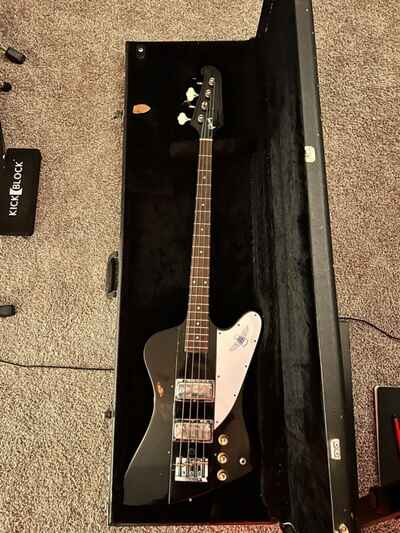
1976 Gibson Thunderbird Bicentennia Ebony
Antioch, Tennessee, 370**, UNITED STATES OF AMERICA
$4145
... more
Rickenbacker 1973 4001
Hendersonville, Tennessee, 370**, UNITED STATES OF AMERICA
$4299
Jetglo finish
Hardshell case
Plays and sounds great??. But then you can probably see that, it??s a great player
350 00 International shipping
... more
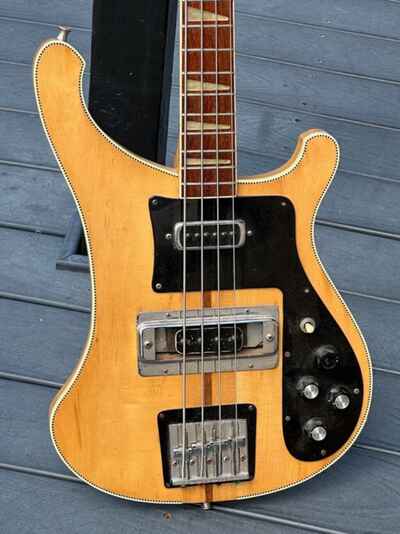
1973 Rickenbacker 4001 Bass a Mapleglo & Checkboard trim a 50 year old bad boy !
Fort Lauderdale, Florida, 333**, UNITED STATES OF AMERICA
$4495

1988 Rickenbacker 4001V63 Fireglo Original Vintage Electric Bass Guitar
Sonoma, California, 954**, UNITED STATES OF AMERICA
$4499

Vintage Rickenbacker 4001 White 1977
Brookfield, Wisconsin, UNITED STATES OF AMERICA
$4499
Vintage Rickenbacker 4001 White 1977
PLEASE CONTACT US WITH ANY QUESTIONS OR FOR AN IN-HAND DESCRIPTION
100% original with a super cool, true vintage vibe. Low action & killer tone ensure this beauty will live on in the hands of its next owner. Professionally set up & ready to play straight out of the case. Don't miss out on great opportunity to pick up a piece of Rickenbacker history
Cosmetic Condition: Used, but not abused, with some mild play wear for its age - various ... more
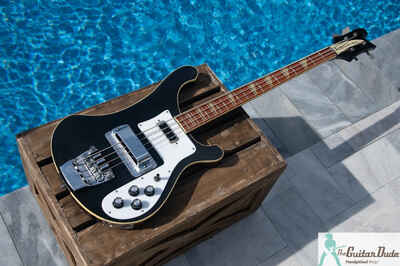
Classic Rickenbacker 4001 - 1978 - Jetglo Finish - Made in the USA -
Pompano Beach, Florida, 330**, UNITED STATES OF AMERICA
$4500
Year: 1978 (May)
Serial: RE2546
Neck Thickness at 1st Fret: 0 92 "
Neck Thickness at 12th Fret: 0 91 "
Weight: 9lbs 13 oz's
Comes in a Hard Case
Professionally setup for optimal tone and playability Truly stage or studio ready!
Vintage done just right This 1978 Rickenbacker Bass is about as cool as you can get. Starting with its crazy visual appeal and getting to the heart of things with its sonic capabilities, once this Jetlo beauty is in your hands,... more
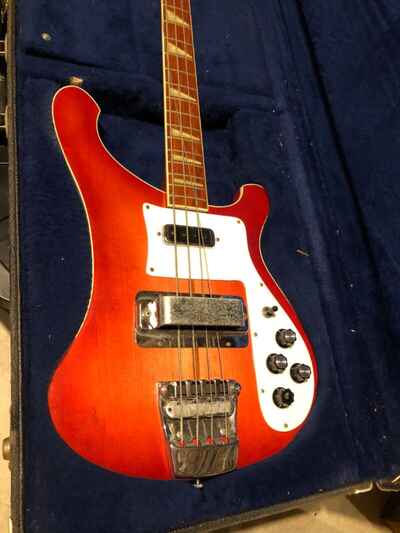
rickenbacker 1979 4001 bass fireglo
New Lenox, Illinois, 604**, UNITED STATES OF AMERICA
$4500
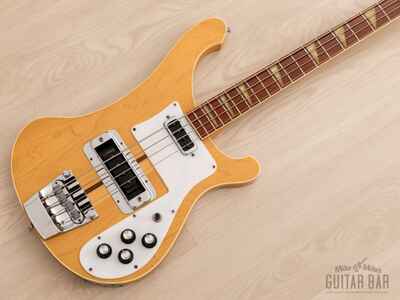
1974 Rickenbacker 4001 Vintage Electric Bass Mapleglo, 100% Original w / Case
Seattle, Washington, 981**, UNITED STATES OF AMERICA
$4700
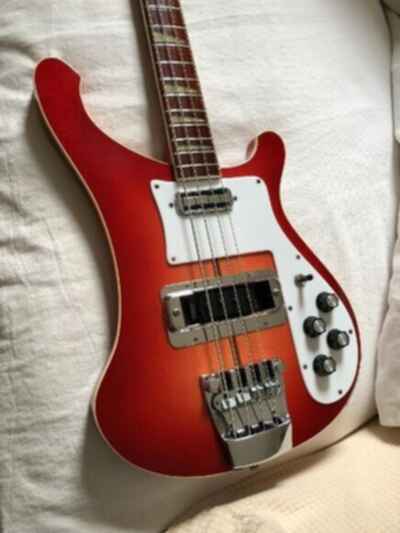
VINTAGE 1974 RICKENBACKER 4001 FIREGLO BASS w / OHSC
Minneapolis, Minnesota, 554**, UNITED STATES OF AMERICA
$4800
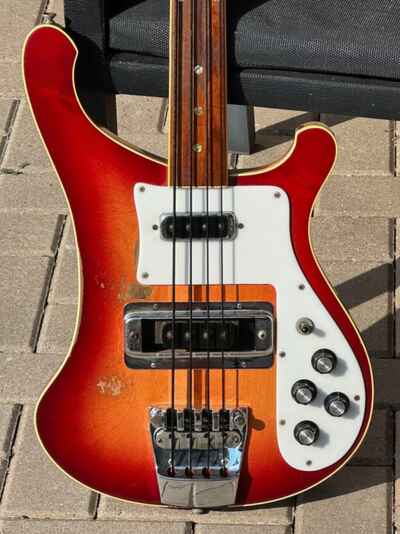
1976 Rickenbacker 4001 Fretless Bass very rare example that's a beat sweet bass.
Fort Lauderdale, Florida, 333**, UNITED STATES OF AMERICA
$4995